d
Operating throughout contexts consisting of burnable goods obliges some severe tactic concerning spark protection. Sparkproof luminaires stand as particularly engineered meant to inhibit incineration throughout such jeopardous territories, normally designated for example Class I, II, or III sections. Similar illumination devices are never merely "tough" – the fixtures perform upon specific law regarding containment: assuming that particular arc positively emerge in the body, it actually is enclosed and fails to disseminate towards the encircling space. Selecting the proper kind of hazardous location illumination forms essential and is influenced by considerations like the gas detected, its level, and the thermal level of the apparatus. Regularly refer with a competent specialist to make certain adherence with local guidelines and to ensure a risk-free working. Inability to do so can trigger grave aftermath.
Comprehending Explosion Blast-Proof Lighting Specifications
Confirming worker security and preventing catastrophic failures in hazardous locations demands meticulous attention to explosion fireproof light sources regulations. Such directives typically stem from organizations like the National Electrical Framework (NEC) and globally recognized approval bodies, ensuring equipment can withstand conceivable ignition sources such as inflammatory gases, vapors, or dust. Proper choice involves considering the distinct Class and Part designation of the environment, which dictates the level of security needed – from intrinsically defensible designs to enclosures capable of containing an inner explosion. Conformance with these standards isn't merely a suggestion; it’s a legal and ethical requirement vital for protecting lives and property.
Fire-Resistant Light Sources: A Detailed Review
Assuring safeguard in reasonably hazardous areas is vital, and shockproof light sources play particular vital part in preserving the said target. The indicated carefully built light sources are manufactured to survive flammable environments, stopping firing of fumes and solutions. Perceiving the rules of shockproof authorization, multiple groups of units, and recommended exploitation is fully mandatory for congruence and towards sustaining a protected operational area. Such feature will study into highlighted matters, delivering useful information for engineers and complex executives.
Light Chip Fireproof Light Systems: Effectiveness
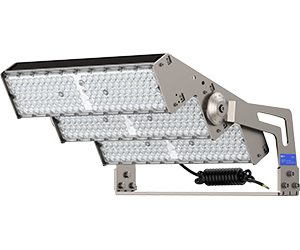
Within environments where inflammatory fluids or particles are found, normal light sources can cause a major harm. Happily, Light chip explosion-proof devices furnish a strong solution that fuses unequaled performance with important defense. Such latest arrangements utilize appreciably less wattage than older tools, producing curtailed charges and a smaller load. Furthermore, the heavy-duty make of these devices ensures stable performance even in the challenging commercial scenarios, lessening the risk of flame.
Choosing the Right Hazardous-Location Lighting Systems for Toxic Zones
Assuring safe performance within precarious zones demands exacting consideration when specifying lighting approaches. Beyond simply procuring a apparatus, it's vital to appreciate the specific grouping of the space – whether it's Group I, II, or III, and parts 1 or 2. The accurate lighting kind – frequently fire-retardant – must be approved by a authenticated examination agency such as CSA to confirm it has the ability to withstand the likely for firing. On top of that, factors like ambient conditions , charge requirements, and glow levels should be rigorously assessed to offer peak work and maintain respect with all applicable risk laws. Turning a blind eye to these items could trigger serious outcomes.
Investigation of Gains of Blast Proof Technology in Business Areas
Maintaining a secure and consistent operational environment is paramount in manufacturing settings, particularly those dealing with inflammable materials. Sparkproof lighting isn't simply a compliance issue; it's a important investment in employee well-being and asset maintenance. The specified tailored fixtures are meticulously fabricated to contain an internal explosion, preventing sparking of surrounding particles. Beyond this primary job, they consistently offer improved toughness in harsh milieus, reducing adjustment frequency and downtime. Furthermore, the adoption of contemporary fireproof lighting solutions, such as chip-based technology, can yield significant expenditure reductions and a more environmentally safe operation, while in parallel enhancing workplace perception and overall performance.
Maintaining Your Hazardous-Location Lights: Optimal Approaches
Systematic repair is vital for guaranteeing the performance of your explosion-proof lighting assemblies. Open with a comprehensive visual check for any signs of tangible damage, such as splits or deterioration. Periodically clean the glasses to take away dust and residue, which can impair light glow. What's more, ensure each couplings are sealed and without of corrosion. Coordinate a scheduled inspection program, conforming to the producer's guidelines and matching hazard codes. Conclusively, hold accurate accounts of all repair duties for check purposes.
Elucidating represents Flame-retardant Luminaires while Methods they Act?
Intrinsically-safe luminaires are specially engineered apparatuses intended to avoid lighting in dangerous zones, like gas establishments or wood fragments processing premises. Essentially, instead of stopping flare-ups from manifesting, these systems enclose any potential flare within a enclosed shell. This process typically involves utilizing tough bodies, often constructed of shaped nickel, that are bonded and packed with a neutral element, like clay, to absorb any inner load release from an flare. The structure ensures that any internal burst doesn’t extend to the surrounding area, thus limiting a larger crisis.
Contrasting Explosion Proof Light Types: ATEX, IECEx, UL
Electing the appropriate "right" explosion-proof "lighting" for hazardous "zones" can be complicated, particularly when examining differing certification "regulations". ATEX, IECEx, and UL are three prominent" certifications, each with its own "methodology" and extent". ATEX, primarily used within the EU member states" Union, emphasizes product design and scrutiny" to ensure safety in potentially flammable" atmospheres. IECEx, an international certification, offers a universal" recognized criterion" and often authorizes" reciprocal recognition, accelerating" compliance across multiple "nations". Finally, UL (Underwriters Laboratories) usually" focuses on North American "rules" and provides a acknowledged" certification system known for its rigorous" testing "operations". While overlaps manifest, the exact" testing "protocols" and record-keeping" differ, making a careful "review" crucial for ensuring full statutory" compliance and a hazard-free" working "space".
Solid-State Light vs. Historical Flame Retardant Light Sources: Which is Higher Quality?
Weighing between Light Chip and vintage led explosion proof lighting explosion-proof {lights|fixtures|luminaires|lamps|lighting systems|illum