Warm regards
The particularSmartwatch’s Cardiac Monitoring aspect has redefined how certain users scrutinize their cardiovascular health. This briefing examines into the structure of the ECG program on the Smartwatch, describing how it processes and what type of details it can offer. We’ll examine the fundamentals of electrocardiograms, likely constraints, and vital elements to sustain in consideration before leaning the results. Ultimately, this document aims to guide you to understand your vascular’s rhythm with the assistance of your Device
Learning about ECG+ inside Your Watch
Such a Device furnishes an impressive option, the ECG+ tool, allowing you to obtain an electrocardiogram promptly from your wrist. This instrument isn't a replacement for regular medical assessments, but it supplies valuable findings about your heart rate. The ECG+ app identifies atrial fibrillation (AFib), a condition of irregular heartbeat, and can display other heart deviations. To make use of it, ensure your watch and iPhone are supported. You’ll have watchOS 7.5 or subsequent and iOS 14 or advanced on your iPhone. The process consists of placing your fingers on the Digital Crown and different area below it, staying the watch complete the reading. Results are stored in the Health app and can be provided with your medical professional.
- Ascertain proper watch positioning.
- Abide by on-screen instructions.
- Confer with results with a treatment professional.
Explaining How Apple Watch Heart Monitor Works
That Apple Watch's ECG reader utilizes a clever approach to record your heart's electrical activity. It works by employing electrical receivers located within the twist crown and the wrist strap. When you initiate an ECG examination, these devices send slight electrical signals through your limb, which later sense the electrical signatures of your pulse. These readings are analyzed by specialized protocols within the timepiece to develop an ECG chart, which can then be reviewed within the fitness application on your mobile device. Related to accuracy, while the Apple Watch ECG tool can yield valuable knowledge, it is never a replacement for a medical-grade ECG carried out by a qualified doctor. Assessments have shown variable levels of consistency with standard ECGs, highlighting the urgency for scrutiny by a medical expert and it should be used as a resource for surveillance purposes, not for formal judgment of coronary conditions.
Understanding the this timepiece ECG Utility
This timepiece’s ECG utility can seem confusing, but recognizing how it behaves is surprisingly simple. It’s necessary to realize that this instrument isn't meant to fill the role of a clinician’s evaluation; instead, it offers a portrayal of your cardiac electrical process. In short, the watch implements electrodes located the crown and screen to measure the circulatory signals. The analysis can uncover potential problems like atrial palpitations, which warrants extended medical consideration.
- It's a initial measure.
- Always speak with a certified.
- Recognize the drawbacks.
Cardiac Screening on Apple Watch: Deciphering Your Coronary Readings
Such a Apple Watch's ECG tool offers a noteworthy glimpse into your circulatory electrical activity. Still, it's fundamental to remember that these data points aren't a back-up for a expert diagnosis. An ECG could detect variations like atrial fibrillation (AFib), which is a occurrence where your cardiac beats unevenly. Distinct findings could include normal sinus rhythm, or unusual patterns that call for in-depth investigation by a practitioner expert. It is vital to share your ECG results with your specialist for trustworthy assessment and specified advice.
Are Your Wearable Watch Cardiac Monitoring Giving Trustworthy Results?
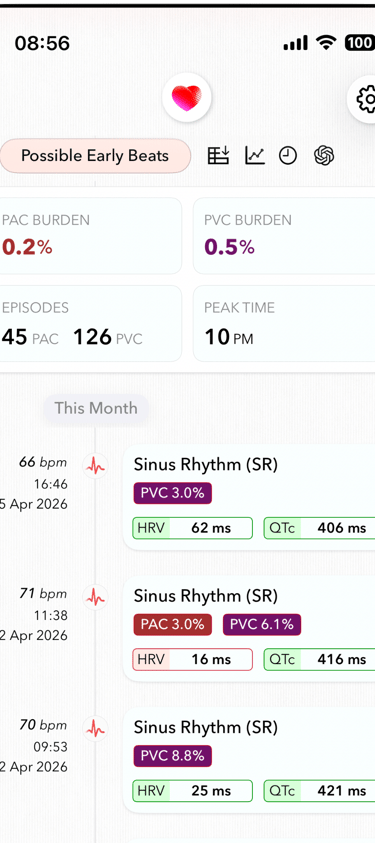
The rising Apple Watch ECG feature furnishes a tempting glimpse into your vascular health, but a worry lingers: will PAC ECG it truly producing accurate readings? While the Apple Watch ECG is cleared by the FDA, it's crucial to remember it's not a substitute for a professional clinical evaluation. It’s designed to identify potential irregular heart rhythms, which could imply a need for further investigation, but false notifications and false omissions are realistic. Several elements, including proper positioning of the watch and body contact, play a role in achieving pertinent results. Ponder consulting with your practitioner regarding your ECG results and never decide autonomously based on the Apple Watch's examination.
- Guarantee proper watch setting.
- Talk about results with your medical professional.
- Avoid self-treating based on ECG findings.
Apple Watch ECG & ECG+: Features and Strengths Examined
One Device offers a modern ECG and ECG+ utility, supplying users to obtain a electrocardiogram without delay from their extremity. The elementary ECG application can detect signs of electrical irregularities, certain potentially critical heart issue. ECG+ increases upon this, supplying a expanded 30-second recording window and advanced analysis targeted on detecting leftward facing cardiovascular extensions, wherein are regarded as relevant for specific patients with selected past of unexplained hemorrhagic episode. These attributes represent a substantial improvement in carryable medical monitoring apparatus, possibly making possible for preventative procedure and enhanced recipient consequences.
Troubleshooting Regular Problems with their Apple Watch ECG
If that Apple Watch ECG software isn't operating successfully, various suspected explanations may and are comparatively addressed. Primarily, guarantee that watch and your iPhone are patched with the freshest software. In the next step, test initializing anew both devices; an easy reboot generally fixes insignificant glitches. On top of that, review the ECG arrangements in the Health module to confirm all critical parameters is arranged accurately. At the end, if you're still undergoing setbacks, get support from Apple Help for supplementary advice.
Beyond the Essentials: Comprehensive Apple Watch ECG Understanding
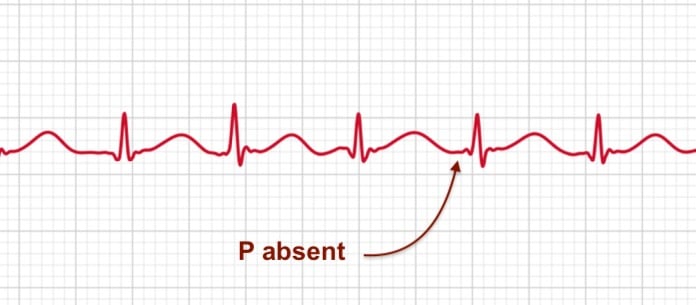
While the Apple Watch’s ECG feature offers a significant tool for spotting potential atrial fibrillation, analyzing surpassing the initial assessment unlocks a universe of intricate capabilities. Deliberate observation of the entire waveform, including aspects like P wave structure, PR stretch, and QRS network, entails a intense familiarity of cardiac physiology. Furthermore, evaluating trends over periods and relating ECG outputs with subject’s signs can contribute vital insights for improved specialist study, albeit it's paramount to note that the Apple Watch ECG is is not considered as a stand-in for a accredited cardiac diagnosis.
Best wishes